Divako Divako
SolutionsUtilities & municipalities Housing & sub-metering Industry & buildings Streetlights & smart city Water networks & overflow Leak & anomaly detection Cost settlement & billing Billing & ERP exports Resident portal & apps Drive-By collection Topics
PlatformHardware Network Data Analyze Integrations Security & data protection API & docs Platform status
Customers Resources About Log in Book a demo

Water

Smart water metering at scale.

Smart water metering replaces the annual meter card with readings that arrive on their own – every day, from every meter, in a form your billing system can use. Divako runs the meters, the networks and the data, and stays neutral about who made the hardware.

Book a demo See remote meter reading

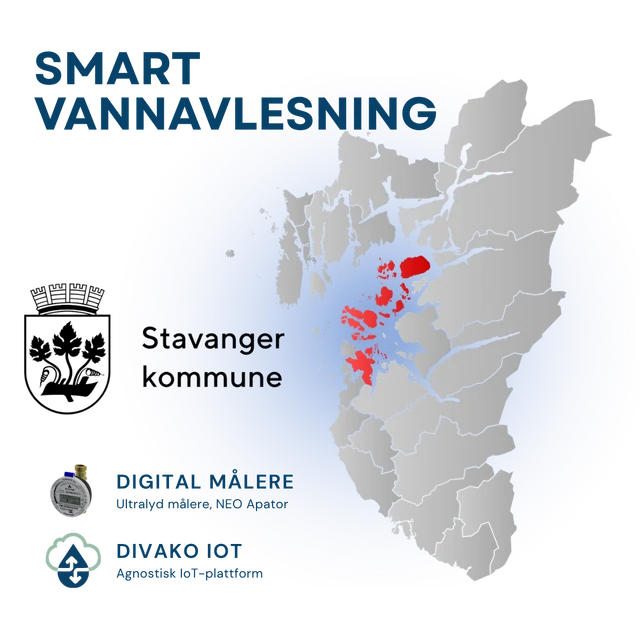
50,000+ homes in scope, Stavanger
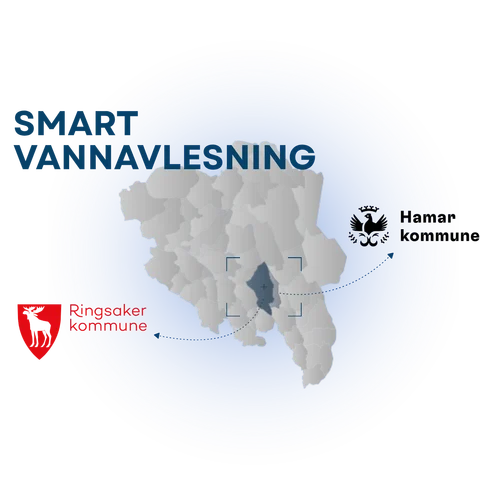
25,000 meters, Hamar and Ringsaker
20,000+ meters, Asker

What is smart water metering?

Smart water metering means the meter measures electronically and sends its reading over a radio network, so nobody has to visit it. Instead of one self-reported figure a year, the utility has a daily – often hourly – series per connection, validated before anyone bills from it.

That changes three things at once. Billing stops being an estimate followed by a correction. A leak on the customer’s side shows up as a continuous flow within days instead of on next year’s invoice. And the network gets a measurable consumption figure per zone, which is the precondition for any serious work on water loss.

How it works on Divako

  1. Meter. Ultrasonic water meters from several manufacturers, provisioned in bulk by EUI, CSV or API. Each meter is bound to a device profile that already knows its payload, its alarm flags and its plausible range.
  2. Network. LoRaWAN where the meters cluster, NB-IoT where they scatter, wM-Bus inside buildings, and drive-by collection for the addresses no fixed network reaches economically. All four feed the same pipeline.
  3. Platform. Readings are decoded, unit- and time-normalised, and checked on arrival: gaps, duplicates, implausible steps and meters drifting out of spec. Bad data is flagged where it enters, not in the billing run.
  4. Analysis. Rules run per meter type – a DN15 apartment meter is not judged by the thresholds of a DN200 trunk main. Leak, burst, backflow, tamper and frost alarms route to email, webhook, MQTT or an existing incident system.
  5. Integration. Finished series go to billing through native connectors such as Komtek and Gemini, and to SCADA, ERP or reporting over REST, MQTT, webhooks and SFTP. Residents can see their own consumption in a portal.

What to watch out for

  • The installation register is harder than the radio. Knowing which meter serial sits at which address, on which pipe, is what makes the data usable. A field flow that photographs the meter and records the position at installation saves months of detective work later.
  • Meter clocks drift. A few seconds a week becomes minutes over a year, and a zone balance built from meters that disagree about midnight produces loss figures that are mostly timing error. Check clock offset as part of routine data quality, and resynchronise before you trust a balance.
  • Reporting interval is a battery decision, not a preference. Hourly data is enough for billing and for most leak detection; fifteen-minute data is a different battery budget. Decide per meter type and per purpose, and keep the option to change it remotely.
  • Consumption data can contain personal data. A reading tied to an address describes when a household is at home. Decide the retention period, restrict who can open an individual customer’s series, and make sure the audit log is switched on before the first export leaves the building.

What you get

  • Vendor-neutral meter support – Kamstrup, Apator, Axioma, Diehl and more
  • LoRaWAN, NB-IoT and wM-Bus in one rollout, drive-by where nothing reaches
  • Bulk provisioning by EUI, CSV or API, with a field installation flow
  • Validation on ingest: gaps, duplicates, implausible values, meter drift
  • Leak, burst, backflow, tamper and frost alarms per meter type
  • Billing exports and native connectors, including Komtek and Gemini
  • Resident and customer portal with year-over-year consumption
  • Role-based access, SSO/SCIM and a full audit log

In production

Asker KommuneNorway
20,000+

meters · LoRaWAN + wM-Bus hybrid

Three vendors replaced by one platform. Kamstrup, Axioma and Apator meters on the same console, with native Komtek billing – the widest range of LoRaWAN + wM-Bus technology in a single Nordic project today.

  • LoRaWAN
  • wM-Bus
  • Hybrid

Read the Asker story →

Hamar & RingsakerInnlandet, Norway
25,000

ultrasonic meters · LoRaWAN + wM-Bus

Two municipalities, one shared network and one data pipeline. Apator Ultrimis and NEO meters with LoRaWAN and wM-Bus on board, alarms for leaks, backflow, tamper and frost – and readings flowing straight into Gemini and Komtek billing.

  • LoRaWAN
  • wM-Bus
  • Komtek
  • Gemini

Read more in the news →

Stavanger KommuneRogaland, Norway
50,000+

homes in scope · vendor-neutral platform

Phase one replaces ~3,000 mechanical meters and adds 2,300 smart units. Apator Ultrimis NEO with LoRaWAN Relay for coastal basements, Diehl HYDRUS bulk meters via Lobaro gateways – and the data stays the municipality's own.

  • LoRaWAN
  • Relay
  • Vendor-neutral

Read more in the news →

Oslo VAVNorway
5,000+

water meters · wM-Bus + NB-IoT + Sensus RF

From manual drive-by collection to continuous remote reading across central Oslo. New Apator Ultrimis and legacy Sensus iPerl meters on one pipeline. The billing team works from daily data, not quarterly spreadsheets.

  • wM-Bus
  • NB-IoT
  • Water

Read the Oslo story →

Alstahaug / SandnessjøenNorway
V200

precision piston meters · LoRaWAN

One of Norway's earliest LoRaWAN water-metering rollouts at municipal scale – and still the default for new installs. Honeywell V200 piston meters across rural and urban households, with coverage that expanded year after year.

  • LoRaWAN
  • Piston
  • Water

Read the Alstahaug story →

Questions

Frequently asked

What is smart water metering?

A water meter that measures electronically and reports its reading over a radio network, instead of being read by a person once a year. The platform collects, validates and stores the readings, raises alarms on abnormal consumption, and hands finished figures to billing.

Do we have to replace every meter at once?

No. Most municipalities roll out area by area, and run mechanical meters, wM-Bus meters and new smart meters side by side for years. Stavanger's first phase replaces around 3,000 mechanical meters and adds 2,300 smart units; the rest follows.

Are we locked to one meter manufacturer?

No. Divako's device library carries validated profiles and payload parsers for meters from Kamstrup, Apator, Axioma, Diehl and others. Asker runs three vendors on one console, which keeps the next procurement open.

How does the data reach our billing system?

Through a scheduled export or a native connector – Komtek and Gemini are in production today – plus REST, MQTT, webhooks and SFTP for everything else. Readings are validated before they leave, so the billing run does not become the place where bad data is discovered.

Is metering data personal data?

It can be. Consumption tied to an address or a customer says something about a household, so treat the readings as personal data: role-based access, a documented retention period and an audit log of who looked at what.

Your rollout

Let's size your metering project.

Tell us how many meters you have, which brands, and what your billing system is. We'll walk through the rollout and the data flow in about 30 minutes.