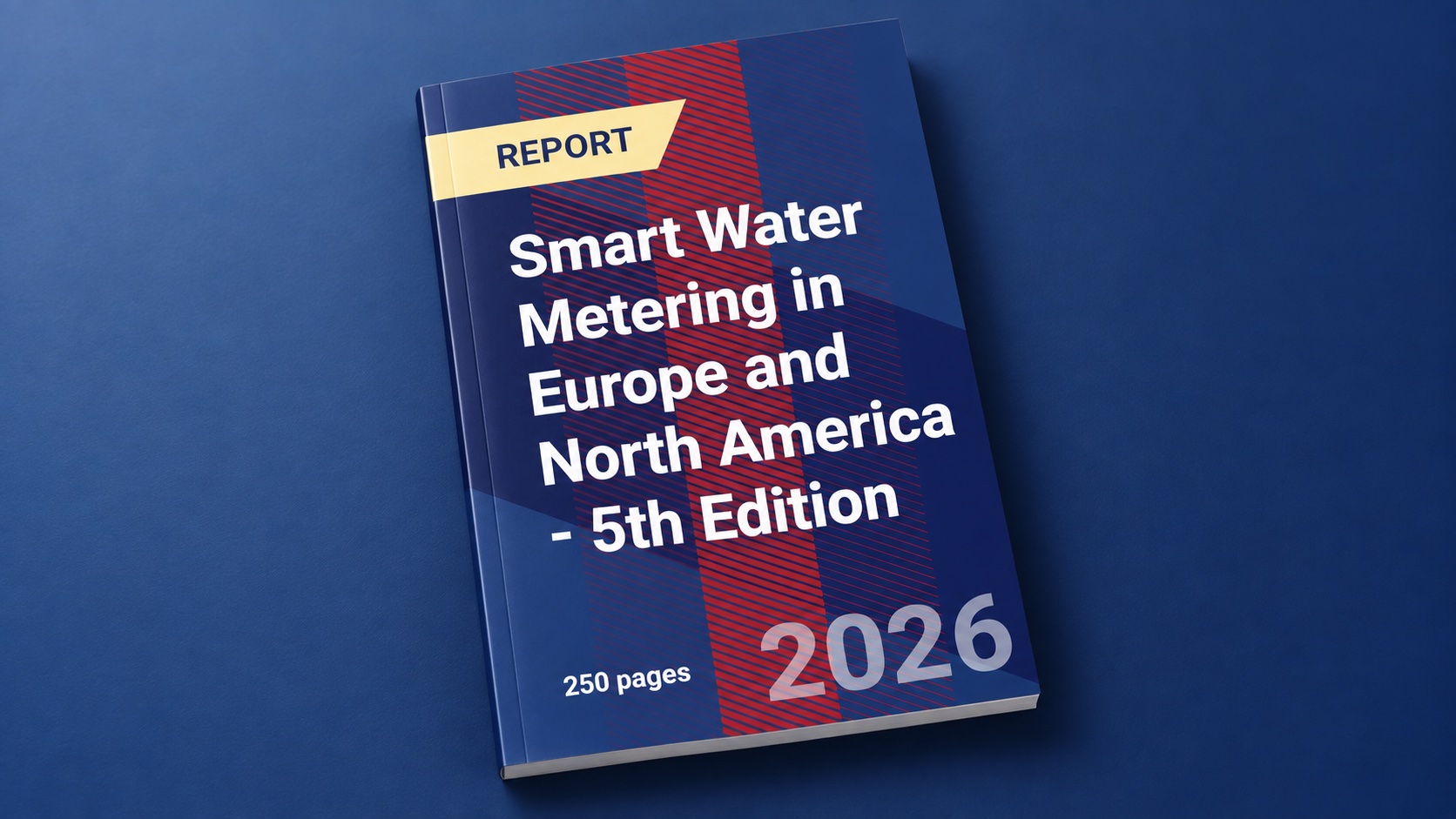
Divako included in Berg Insight’s smart water metering report
Berg Insight lists Divako among software solution providers in its 2026 report on smart water metering in Europe and North America.

News · 19 May 2026
Two neighbouring Innlandet municipalities are moving their water networks onto one shared platform. In the first phase, around 25,000 ageing mechanical meters give way to ultrasonic remote-read units – and the agreement is built to keep scaling until nearly every home and business across both municipalities reads itself. For more than 69,000 residents, the annual meter card is on its way out.
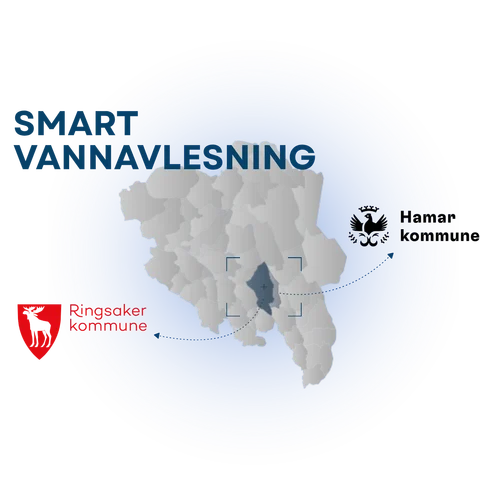
Hamar and Ringsaker have chosen to digitalise water metering together, on a single technical platform built on Divako. Rather than run two separate projects, the neighbouring municipalities share one network, one data pipeline and one operational view – one of the more ambitious municipal IoT rollouts in Norway, and a template for how regions can pool infrastructure instead of duplicating it.
The first phase replaces roughly 25,000 analogue and mechanical meters with digital ultrasonic units. The agreement does not stop there: it is structured to extend to almost every residence and commercial building across both municipalities, growing into a single IoT network of thousands of measurement points.
The new units are Apator Ultrimis and NEO ultrasonic meters. Ultrasonic measurement has no moving parts to wear out, so accuracy holds across a service life of up to sixteen years – and each meter carries both LoRaWAN and wM-Bus on board, leaving the choice of transport open building by building. Only a handful of hard-to-reach points need anything else.
The tender set complete coverage as the baseline, not the aspiration. Divako designs, builds and operates the wireless network that ties the region together – LoRaWAN as the backbone, wM-Bus where it fits, and drive-by only for the rare location that still needs it. The point is an always-on connection that reaches deep basements and dispersed rural buildings alike.
That continuous link removes most of the need for manual or drive-by reading. For the municipalities it frees thousands of staff hours a year, and replaces a once-a-year snapshot with a live picture of the whole supply network.
Divako’s strength here is that it is meter-agnostic: it collects, decodes and harmonises readings regardless of the manufacturer underneath. That keeps both municipalities free of vendor lock-in and free to scale on their own terms in the years ahead. On top of the data sits alarm management – alerts for leaks and pipe bursts, backflow, dry or tampered meters, and frost risk – so problems surface the day they start, not at the next billing cycle.
Readings flow automatically from Divako into the municipalities’ own systems – Gemini and Komtek – for fully automated billing and analysis. Administration works from real-time data instead of estimates, residents pay for what they actually use, and abnormally high consumption that hints at a hidden leak gets flagged early rather than discovered on an invoice months later.
"We look forward to working closely with Hamar and Ringsaker to establish a robust and future-oriented solution." - Divako technology team
Hamar and Ringsaker join a growing list of Norwegian municipalities reading their water networks remotely on Divako, alongside Oslo VAV and Asker Kommune. The pattern repeats: pick a multi-protocol, vendor-neutral platform, bring in whatever meter the procurement delivers, and turn raw sensor data into something the water utility can actually act on.
Berg Insight lists Divako among software solution providers in its 2026 report on smart water metering in Europe and North America.
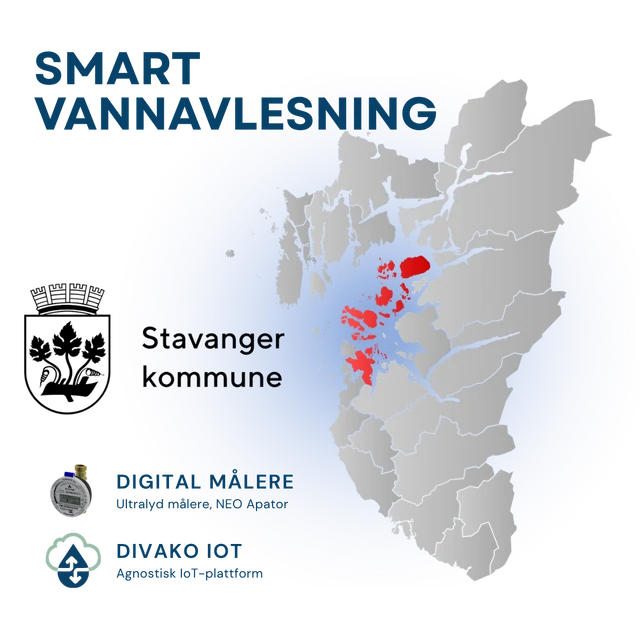
Norway's energy capital signs a framework agreement for remote-read water metering on Divako – choosing an open, vendor-neutral platform that keeps data ownership and hardware choice in the municipality's hands. Phase one swaps ~3,000 mechanical meters and adds 2,300 smart units, with room to scale past 50,000 homes.
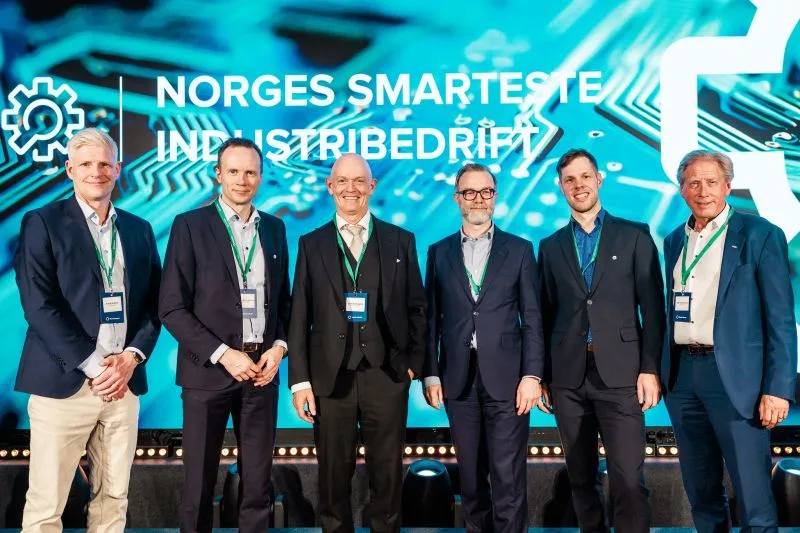
An operation running on the Divako platform was named one of three finalists for Norges smarteste industribedrift 2026 – Norway's Smartest Industrial Company – alongside Elkem and Norsk Kylling.
Same shape, your region
If you are shaping a remote-metering procurement – on your own or with a neighbour – we will walk you through the architecture and the trade-offs, no obligations.