20,000+
meters · LoRaWAN + wM-Bus hybrid
Three vendors replaced by one platform. Kamstrup, Axioma and Apator meters on the same console, with native Komtek billing – the widest range of LoRaWAN + wM-Bus technology in a single Nordic project today.

Water
Remote reading means the meter sends its own figure, every day, without a route to drive or a card to post. Divako collects the readings over LoRaWAN, NB-IoT and wM-Bus, checks them, and hands billing a complete set on the first of the month.
Remote reading is the meter reporting its own register value over a network, on a schedule, instead of someone driving a route or a customer posting a card. The reading arrives, gets validated and is stored – and the annual reading round, with its missed appointments, transcription errors and estimated invoices, stops existing.
The practical difference is not the effort saved on reading day. It is that the utility now has a complete, dated series per connection. Billing runs from measured figures, customer service can answer a disputed invoice with a curve, and a leak on the customer’s side is visible while it is still small.
meters · LoRaWAN + wM-Bus hybrid
Three vendors replaced by one platform. Kamstrup, Axioma and Apator meters on the same console, with native Komtek billing – the widest range of LoRaWAN + wM-Bus technology in a single Nordic project today.
ultrasonic meters · LoRaWAN + wM-Bus
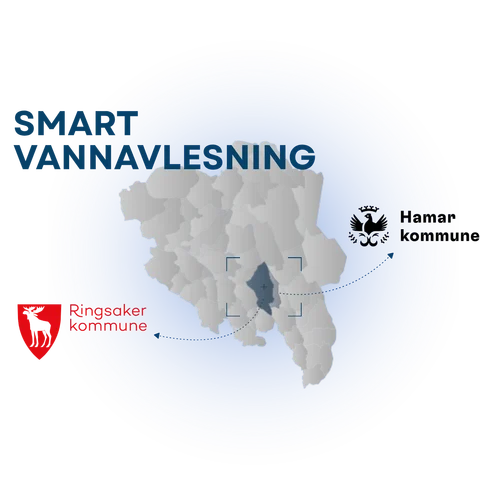
Two municipalities, one shared network and one data pipeline. Apator Ultrimis and NEO meters with LoRaWAN and wM-Bus on board, alarms for leaks, backflow, tamper and frost – and readings flowing straight into Gemini and Komtek billing.
water meters · wM-Bus + NB-IoT + Sensus RF
From manual drive-by collection to continuous remote reading across central Oslo. New Apator Ultrimis and legacy Sensus iPerl meters on one pipeline. The billing team works from daily data, not quarterly spreadsheets.
apartments · water + heat sub-metering
A Trondheim housing co-op with ultrasonic water meters and heat meters per unit, LoRaWAN on a single gateway, and automated per-apartment billing. One invoice for the board; one app for residents to see their use.
Questions
Collecting meter readings over a network instead of by visiting the meter. The meter transmits its register value on a schedule; the platform receives it, validates it and stores it, so billing, customer service and loss analysis all work from the same figures.
They stay in the same system. Drive-by and walk-by collection feeds readings from a vehicle or a handheld into the same pipeline, with offline sync, so a hard-to-reach basement is a different collection method rather than a different process.
Usually, yes. Oslo VAV reads legacy Sensus iPerl meters alongside new Apator Ultrimis units in one pipeline. Mixed fleets are normal for years, and the platform is where the difference stops being visible.
Daily is the common baseline for billing, with hourly or finer series where leak detection or large customers justify it. The interval is set per meter type, because it is also a battery decision.
The platform flags the gap rather than hiding it. You decide the policy – wait, re-request, or fill from the meter's own cumulative register on the next successful read – and the audit trail shows which figures were measured and which were derived.
Your meter fleet
Tell us how many meters you read today and how. We'll show what the same fleet looks like on continuous remote reading – in about 30 minutes.